

What If I Missed God's Will for My Life?
What if I missed God's will for my life?
Short answer: you can make wrong choices, but you cannot make a choice that puts you out of God's reach. Your decisions matter, and some of them have real consequences. But the Bible's promise is that "in all things God works for the good of those who love him" (Romans 8:28). If you love Him, you are not living in plan B. You are living in a story He is still writing.
That doesn't mean nothing went wrong. It means a wrong turn is not the end of the road.
Why does it feel like I missed it?
Most of the fear comes from picturing God's will as a single dot: one right school, one right job, one right person, one right city. Hit the dot and life works. Miss it and you spend the rest of your life in the runner-up version.
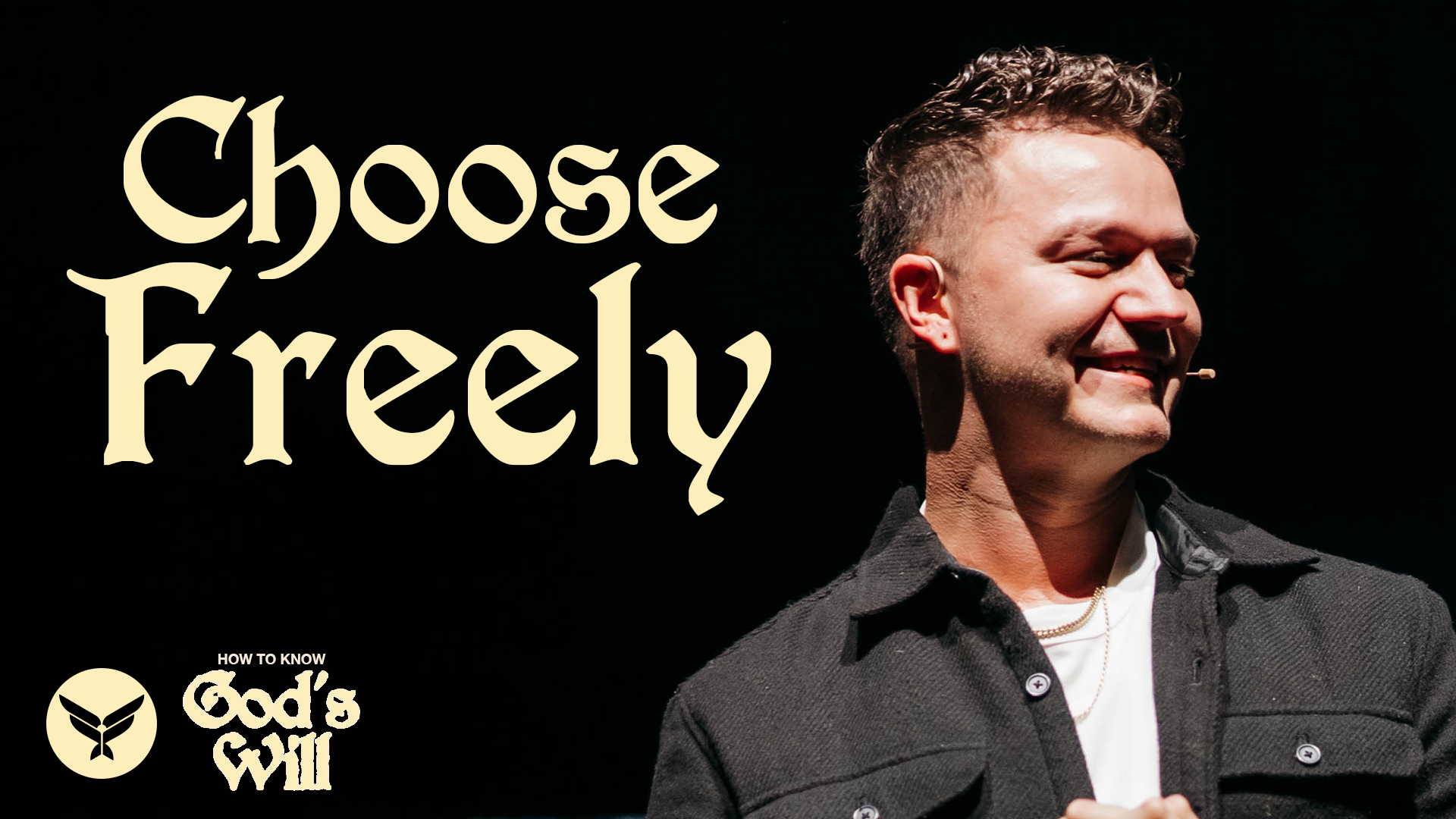
In his message Choose Freely, Brad put it differently: "God's will is more of a field than a dot." God gives clear boundaries in His Word and real freedom inside them (Genesis 2:16–17). If you were living inside that field, you didn't miss anything. You made a choice, and God works through choices.
The feeling usually shows up when life gets hard. The marriage is harder than you expected, the job didn't turn out, the move didn't fix what you hoped it would. Hard is not proof you missed God. It's often just proof you're living in a broken world (John 16:33).
Can you actually miss God's will?
Yes and no, and the difference matters.
The Bible talks about God's will in more than one way. There is His sovereign will: everything He has decided will happen, and nothing can stop it. Job says it plainly: "no purpose of yours can be thwarted" (Job 42:2). There is His revealed will: what He has told us in Scripture about how to live. And there are moments of specific direction, when God tells a person to go somewhere or do something in particular (Acts 16:6–10).
You can step outside His revealed will. That's called sin, and we all do it. You can ignore specific direction, the way Jonah did. But you cannot step outside His sovereign will. As Brad said: "Even though we can mess up the spoken and the specific, His sovereign will is wrapped around all of it. He still has the ability to take the mistakes we've made and the times we've run away, and get you where you need to go."
People in the Bible who got off course
If missing God's will disqualified people, the Bible would be a very short book.
Moses: forty years in the desert
Moses tried to rescue Israel his own way, killed an Egyptian and ran for his life (Exodus 2:11–15). He spent the next forty years tending sheep in the wilderness. Then "after forty years had passed, an angel appeared to Moses in the flames of a burning thorn bush" (Acts 7:30). The detour became his training ground. He learned to lead sheep before he led a nation.
Jonah: the second time
God told Jonah to go to Nineveh, and he got on a boat going the opposite direction. You know how that went. But the most hopeful line in the book is Jonah 3:1: "Then the word of the Lord came to Jonah a second time." Brad's version: "This is option B. You can go to Nineveh on foot or in the belly of a fish." God's plan didn't change. Jonah got a second chance to walk in it.
Peter: three denials, three restorations
Peter swore he would never deny Jesus, then denied Him three times before the rooster crowed. After the resurrection, Jesus met him on a beach, asked him three times, "Do you love me?" and gave him a job each time: "Feed my lambs... Take care of my sheep" (John 21:15–17). The man who failed most publicly preached the first sermon of the church (Acts 2).
Is a wrong turn the same as sin?
Not always, and it helps to know which one you're dealing with.
Some choices were simply unwise, or made with the best information you had at the time. You took the job, it didn't work out, and nobody did anything wrong. There is nothing to repent of there. "In their hearts humans plan their course, but the Lord establishes their steps" (Proverbs 16:9).
Other choices were sin: you knew what God said and did something else. Those need confession, not just regret. And the promise for them is just as clear: "If we confess our sins, he is faithful and just and will forgive us our sins and purify us from all unrighteousness" (1 John 1:9).
Either way, God can still work with it. Joseph's brothers sold him into slavery, and years later he told them, "You intended to harm me, but God intended it for good" (Genesis 50:20). God doesn't call sin good. He redeems what sin breaks.
What do I do now?
- Stop rehearsing the past. Paul, who had persecuted the church, wrote: "Forgetting what is behind and straining toward what is ahead, I press on" (Philippians 3:13–14).
- Confess what needs confessing. If sin is part of the story, name it to God and, where it's wise, to someone you trust (James 5:16).
- Do the next right thing where you are. Brad's picture is Moses with the sheep: "We're looking for all the burning bushes, but we're not tending the sheep." Be faithful in the place you're in.
- Trust God with the rest. His mercies "are new every morning; great is your faithfulness" (Lamentations 3:22–23).
Frequently asked questions
Is it too late for God's plan for my life?
No. Moses was eighty when he finally stood before Pharaoh (Exodus 7:7). As long as you are alive, God is still working. His plan was never a single dot you could miss forever.
Did I marry the wrong person?
If you're married, the person you married is the one God calls you to love now (Matthew 19:6). We wrote more about that in Is There Only One Person God Wants You to Marry?
Can God use my mistakes?
Yes. Romans 8:28 doesn't say every choice was good. It says God works in all things for the good of those who love Him. Peter's failure became part of his ministry, not the end of it.
Does Romans 8:28 mean everything that happens is good?
No. It says God works for good in all things, not that all things are good. Loss, sin and pain are still real. The promise is that none of them get the last word for those who love Him.
God is a better leader than you are a follower
That's the line from Brad's message that sets people free: "God is a better leader than you are a follower. If God wants to get your attention, He'll get your attention." You don't have to get every decision perfect. You have to keep following the One who never loses track of you.
This post comes from Brad Straarup's message, Choose Freely, on how to know God's will for your life. If you're facing a decision right now, read How to Make Decisions When God Seems Silent.
And if you're near Chandler and want people around you while you find your footing again, plan a visit and come as you are.
You don't have to take it alone.
Come this Sunday, or find a group of people walking through the same season. Either way, we'd love to know you.